A feeder is less a single product than a decision about which birds you want to watch and how much weather it has to survive. A tube feeder hung from a balcony in Montreal faces different problems than a platform feeder on a Prairie acreage. The four common feeder styles below each favour a particular group of birds, and most yards end up with two of them rather than one.
Matching the feeder to the bird
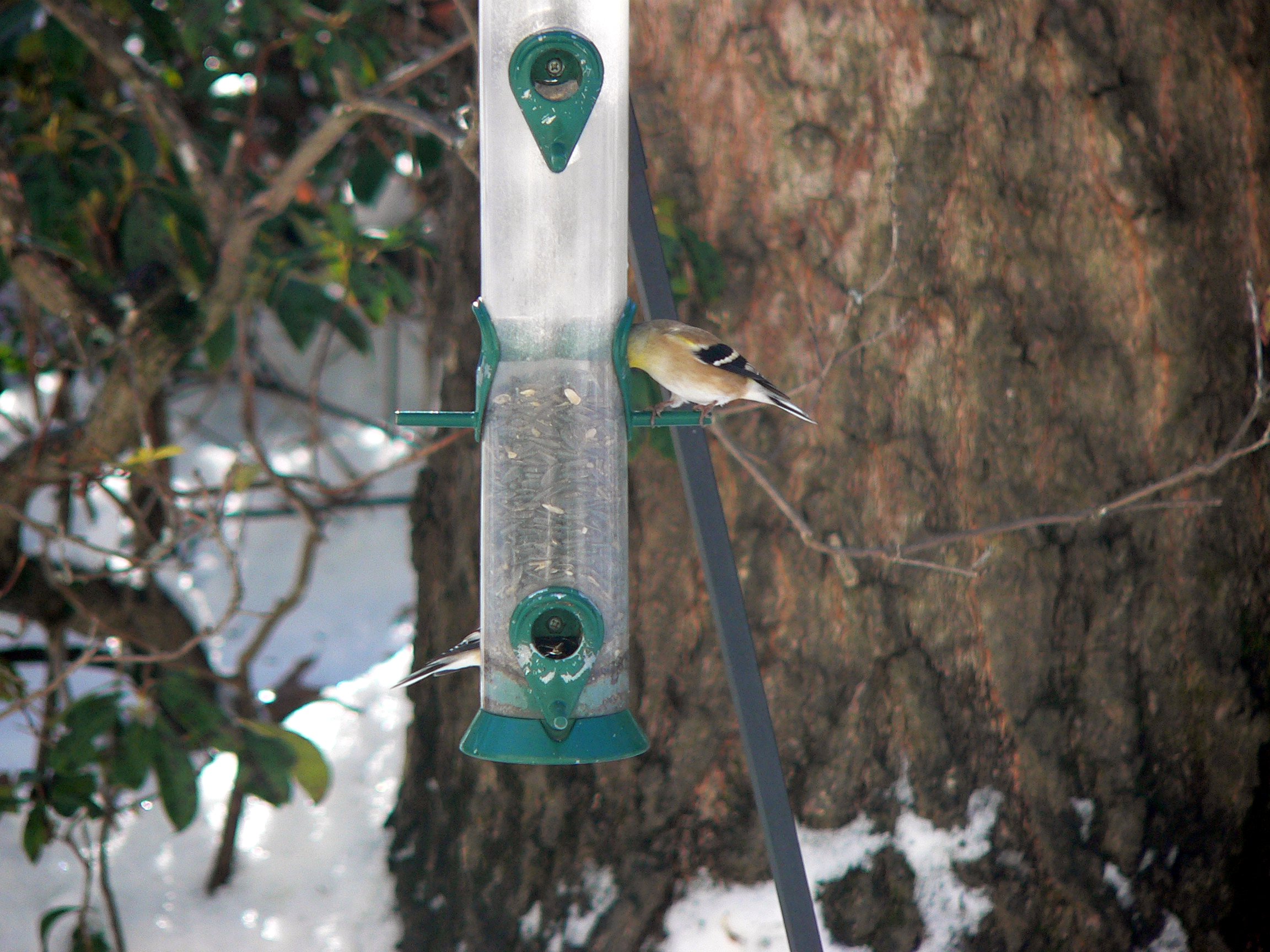
Small perching birds such as chickadees, goldfinches, and nuthatches use tube feeders comfortably. Ground-feeding species like juncos and Mourning Doves prefer a low platform or simply the seed that spills below. Woodpeckers come to suet rather than seed. Knowing which group you are trying to attract narrows the choice quickly.
| Feeder type | Best for | Common seed |
|---|---|---|
| Tube | Chickadees, finches, nuthatches | Black-oil sunflower, nyjer |
| Hopper | Cardinals, jays, sparrows | Sunflower, mixed seed |
| Platform | Juncos, doves, sparrows | Mixed seed, cracked corn |
| Suet cage | Woodpeckers, nuthatches | Suet cakes |
Seed is most of the decision
Black-oil sunflower seed is the closest thing to a default, because its thin shell and high fat content suit a wide range of birds. Nyjer (sometimes sold as thistle) draws goldfinches and other small finches to a feeder with narrow ports. Inexpensive mixes heavy in red milo are often scattered rather than eaten, so reading the label is worth a moment.
Winter changes the priorities
Through a cold Canadian winter, fat content matters more than variety. Suet and sunflower seed give birds the energy they need on short days. Keep seed dry, since damp seed clumps and spoils. A feeder that is easy to refill with gloves on, and easy to take down for cleaning, is worth more in January than any extra capacity.
Keep it clean. Wet or crowded feeders can spread disease between birds. Cleaning a feeder periodically with hot water, and letting it dry fully before refilling, is a simple habit that protects the visitors you are trying to enjoy.
Placement
- Place feeders either very close to a window (within about a metre) or well away from it, which reduces the force of window collisions.
- Nearby shrubs or trees give smaller birds cover to retreat to between visits.
- If squirrels are persistent, a baffle on the pole is usually more effective than any single “squirrel-proof” feeder claim.
For species accounts and reference material, Birds Canada and the Cornell Lab’s All About Birds both maintain detailed, publicly available pages.